Where are the Buran shuttles now? Every orbiter and mock-up, accounted for
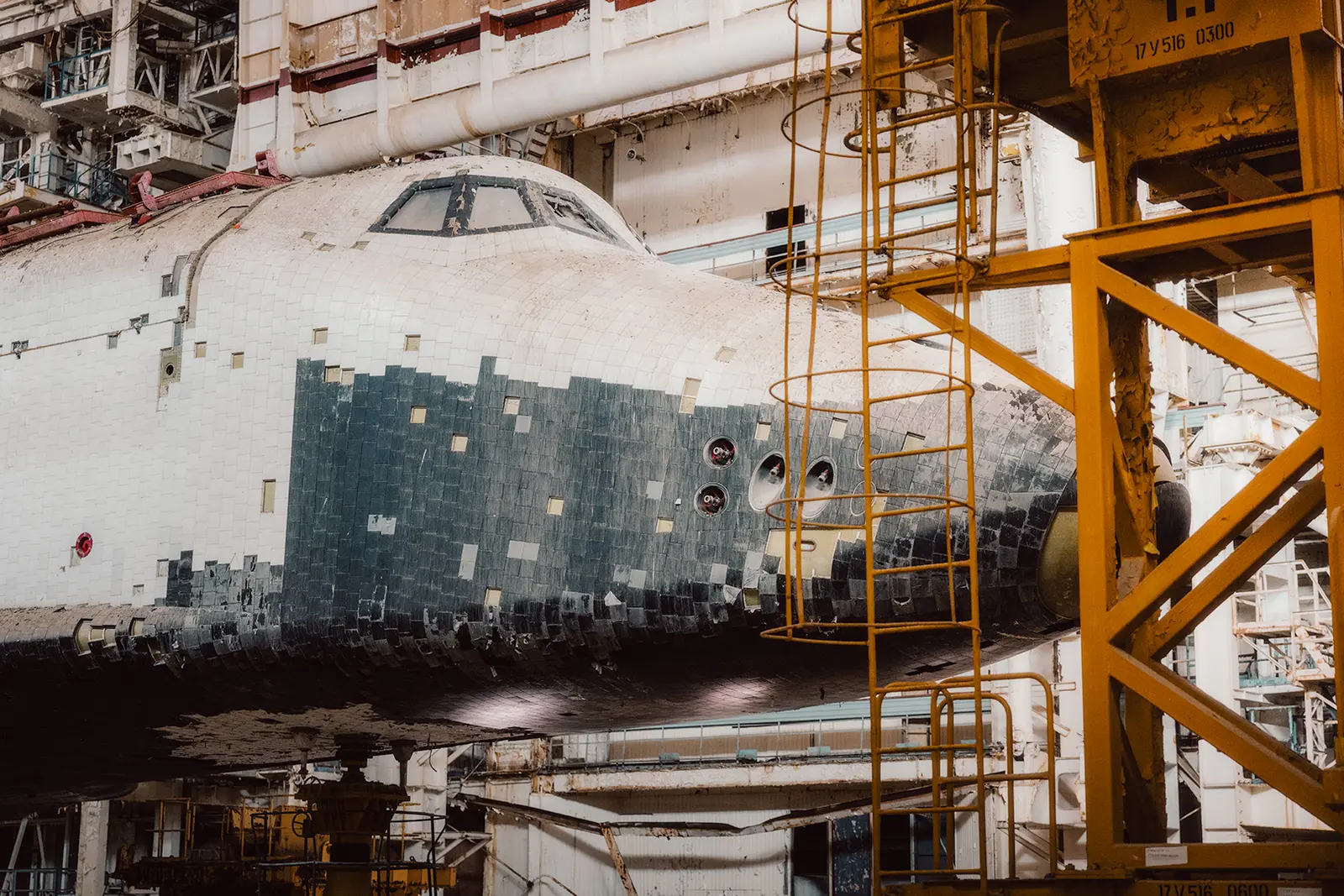
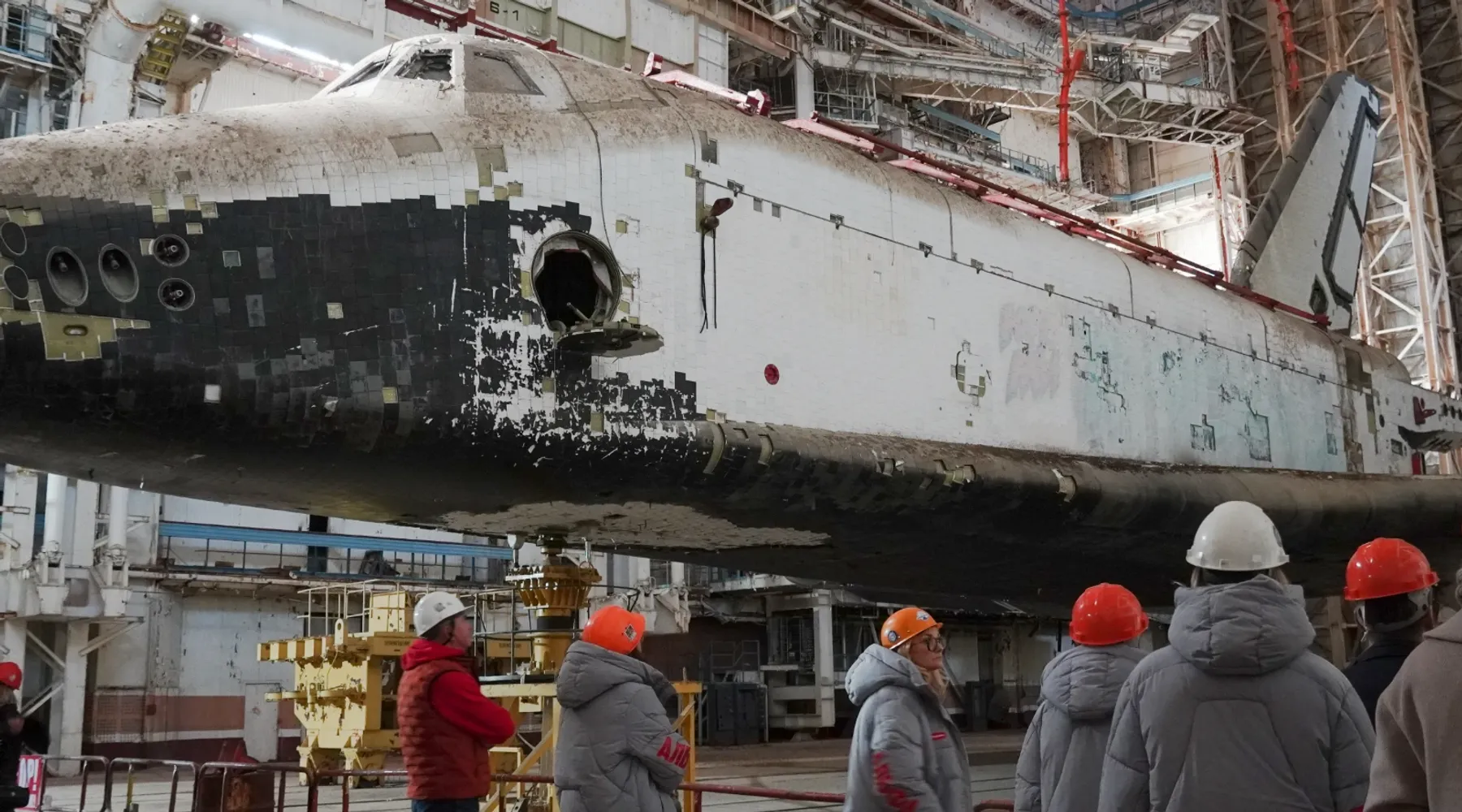
If you have seen a photograph of a Soviet space shuttle sitting in a pitch-dark hangar with graffiti sprayed across its nose, you have seen one of the most reproduced images in spaceflight. What almost none of those photographs tell you is which orbiter you are looking at — and the answer is never the one people assume.
Start with the fact that reframes everything else: the Buran that flew no longer exists. The orbiter in that famous hangar never flew at all. And the only flight vehicle left in Russia was never finished.
The confusion is understandable. "Buran" gets used for any of a dozen airframes, and each met a different end.
First, a distinction: orbiters and mock-ups
Everything built for the Energia–Buran programme falls into two groups, and the difference matters.
Flight vehicles were built to go to space. Five were started; by the time the programme was cancelled in 1993, only two had been completed.
Mock-ups were full-size airframes for testing on the ground and in the atmosphere — structural loads, electrics, transport, fuelling, landing. Seven are known. The irony is that they fared far better than the real thing: when the programme ended they stayed with the institutes that used them, and most still survive.
1.01 Buran: the one that flew
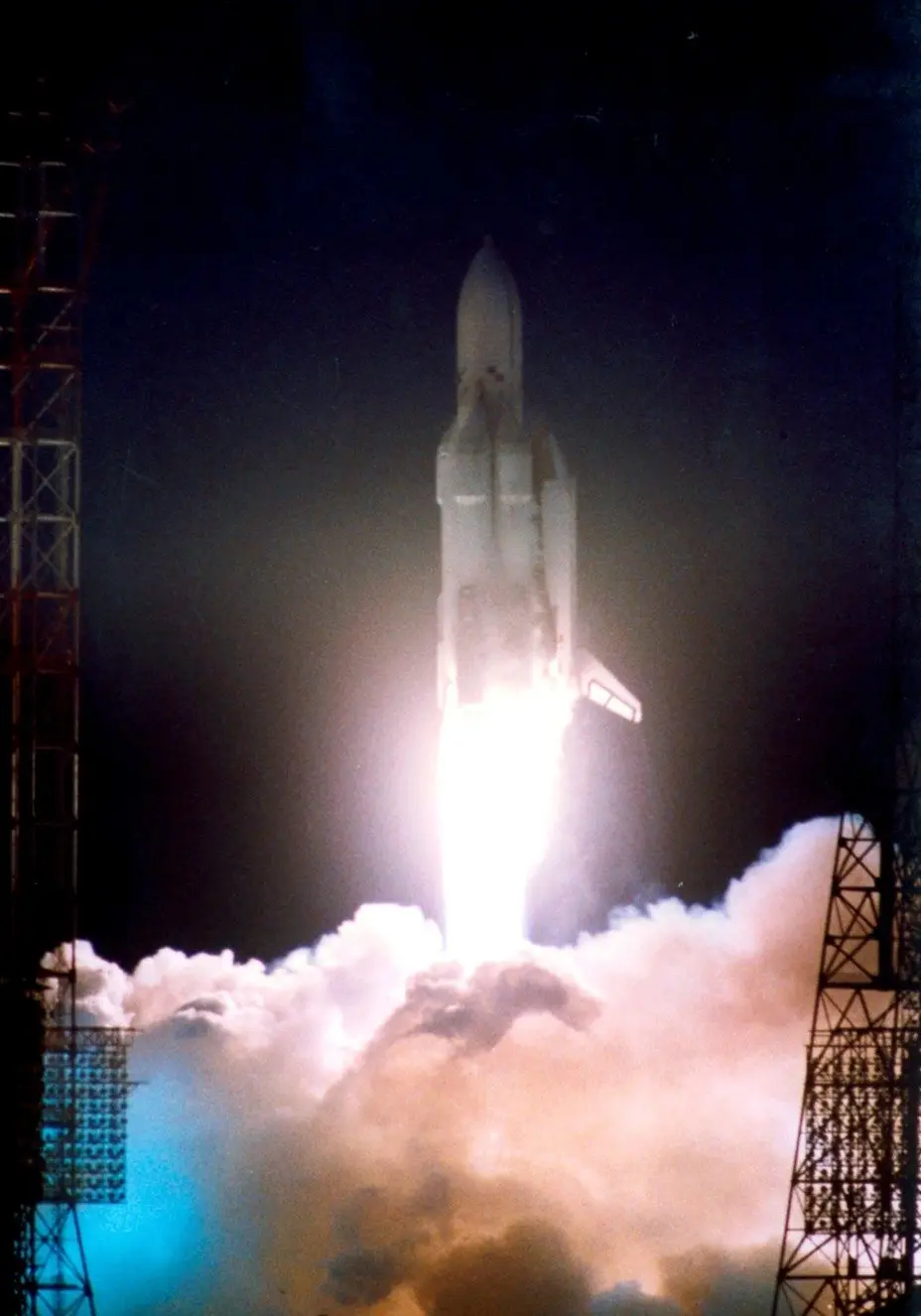
On 15 November 1988 Buran made its only flight: two orbits, no crew aboard, and an automatic landing at the Yubileiny airfield.
That last part deserves its due. An automatic landing by an orbital spaceplane had never been performed before, and it remains something the American Space Shuttle never did — the Shuttle was flown down by hand on every single one of its returns. Buran did it on its first and only attempt, with nobody inside.
The programme was cancelled, and the vehicle went into storage in the assembly and test building at Site 112, Baikonur.
On 12 May 2002, the roof of that building collapsed. The roofing had taken on water, and the structure gave way under the weight while workers were up on it; by different accounts seven or eight of them were killed.
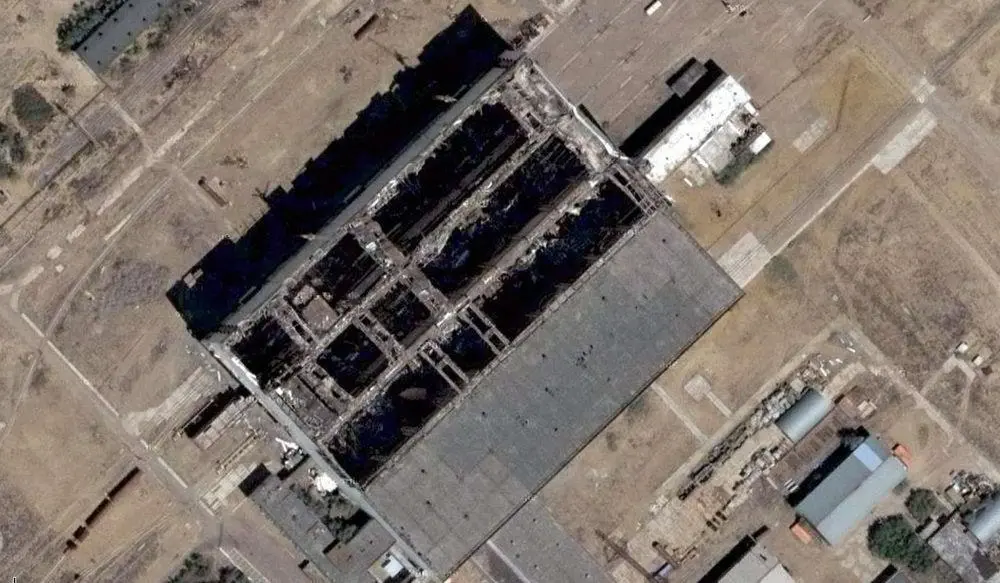
Destroyed underneath it were the only Buran ever to fly and a full-size mock-up of the Energia rocket stored alongside.
So the precise answer to "where is Buran now" is: nowhere. It has not existed since 2002.
1.02 Burya: the one that nearly made it
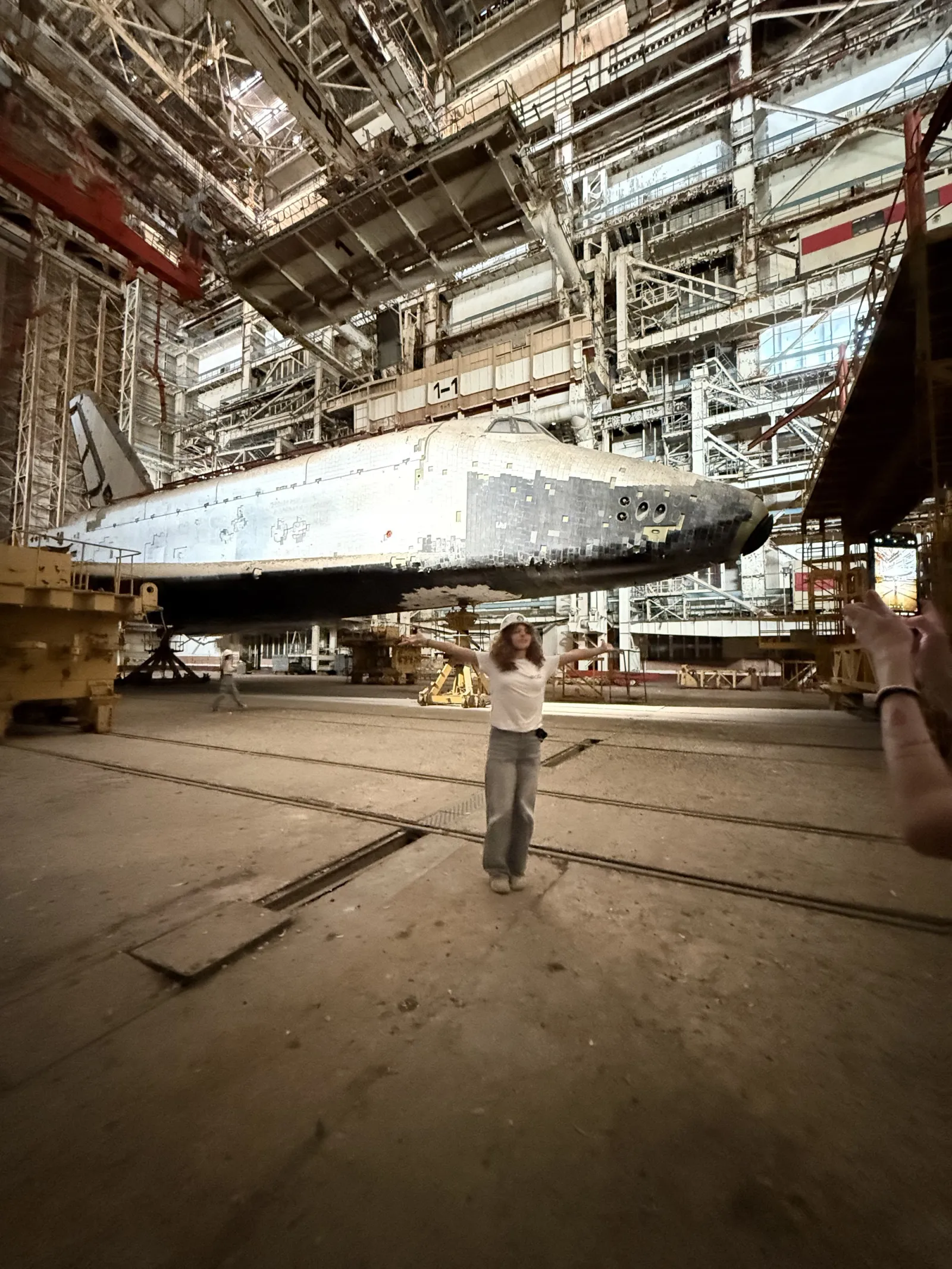
The second flight vehicle was built at the same Tushino machine-building plant in Moscow. It's intended name was Burya — "Storm" — though in the West it has long been known as Ptichka, "little bird", an informal nickname that stuck.
By the time the programme ended, Burya was 95–97 per cent complete, and essentially ready to fly as early as 1992. Its mission would have been harder than the first: automatic again, but docking with the Mir space station so that the station's crew could come aboard, then landing itself. The flight was never scheduled.
Since the mid-1990s Burya has stood in the assembly-and-fuelling building (MZK) at Site 112A — one of the sturdiest structures at the cosmodrome, designed to survive an explosion during fuelling. This is the hangar in the photographs, and the orbiter in them is Burya.
Ownership is tangled. According to open sources, the airframes belong to a privately controlled Kazakh company; in 2020 the Russian side tried to buy Burya back and the deal went nowhere.
It’s story is arguably the saddest of all. Buran at least flew. Burya was ready for a flight that never came.
Baikal: the only flight vehicle left in Russia
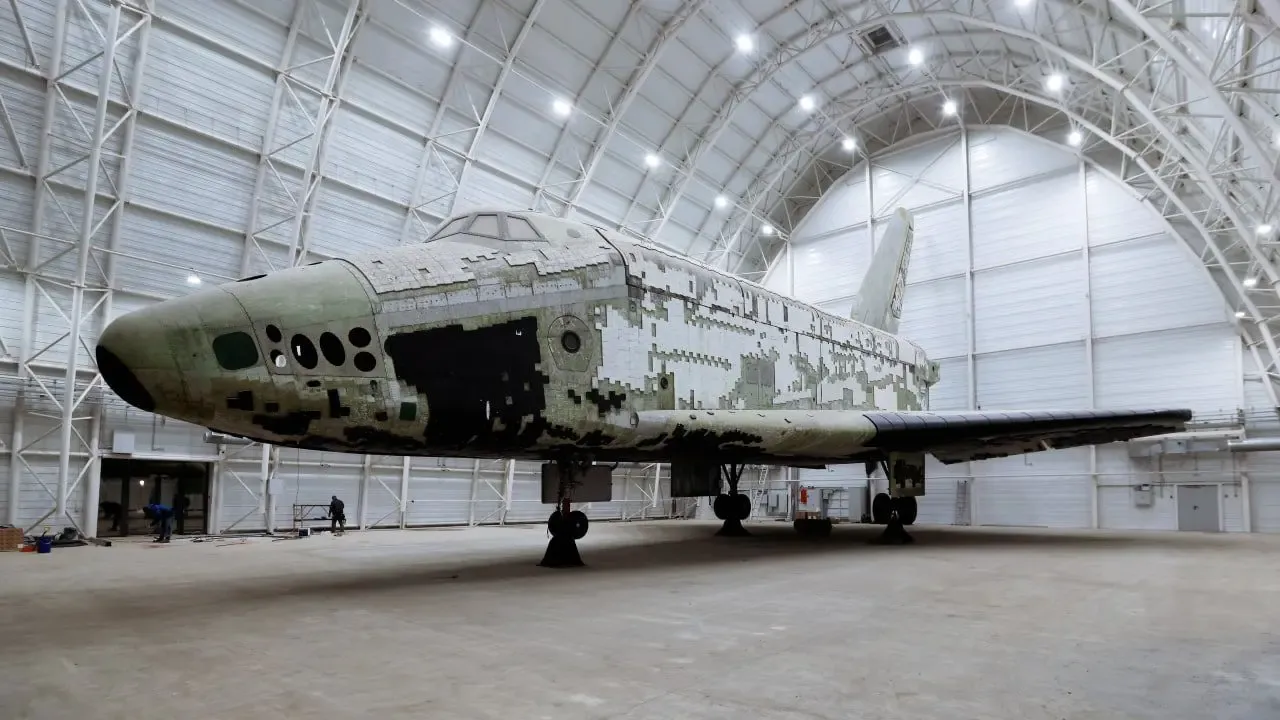
The third orbiter was the first of a second series. It was to be called Baikal, though the name was never painted on. Its flight was pencilled in for 1994; when work stopped it was 30–50 per cent complete.
What followed was nearly thirty years of being moved around. Baikal sat in the Tushino plant's workshops, then outdoors on the plant's grounds. In June 2011 it was floated down the Moskva on a barge to Zhukovsky, home of the Gromov Flight Research Institute, and shown at the MAKS-2011 air show — restored on one side only, the side facing the crowds. Then it stood on the airfield for more than a decade.
On 5 August 2024 Baikal was handed over to the Museum Complex in Verkhnyaya Pyshma, outside Yekaterinburg in the Urals, where it is getting a proper restoration, heat-shield tiles included. As of summer 2026 the work was still under way and the orbiter could be seen at the museum's Buran exhibition centre.
It is now the only Buran flight vehicle anywhere in Russia.
The rest: never more than parts
The fourth and fifth orbiters, 2.02 and 2.03, never got past an early stage of construction. Vehicle 2.02 was 10–20 per cent complete when the programme ended, and what existed of it stayed in the Tushino workshops; 2.03 had barely been started, and its parts were broken up by the mid-1990s with nothing identifiable left. Neither ever became a spacecraft, so there is effectively nothing to go and find.
The mock-ups: five full-size Burans
The mock-ups are the opposite story: never meant for space, but most of them outlived the orbiters.
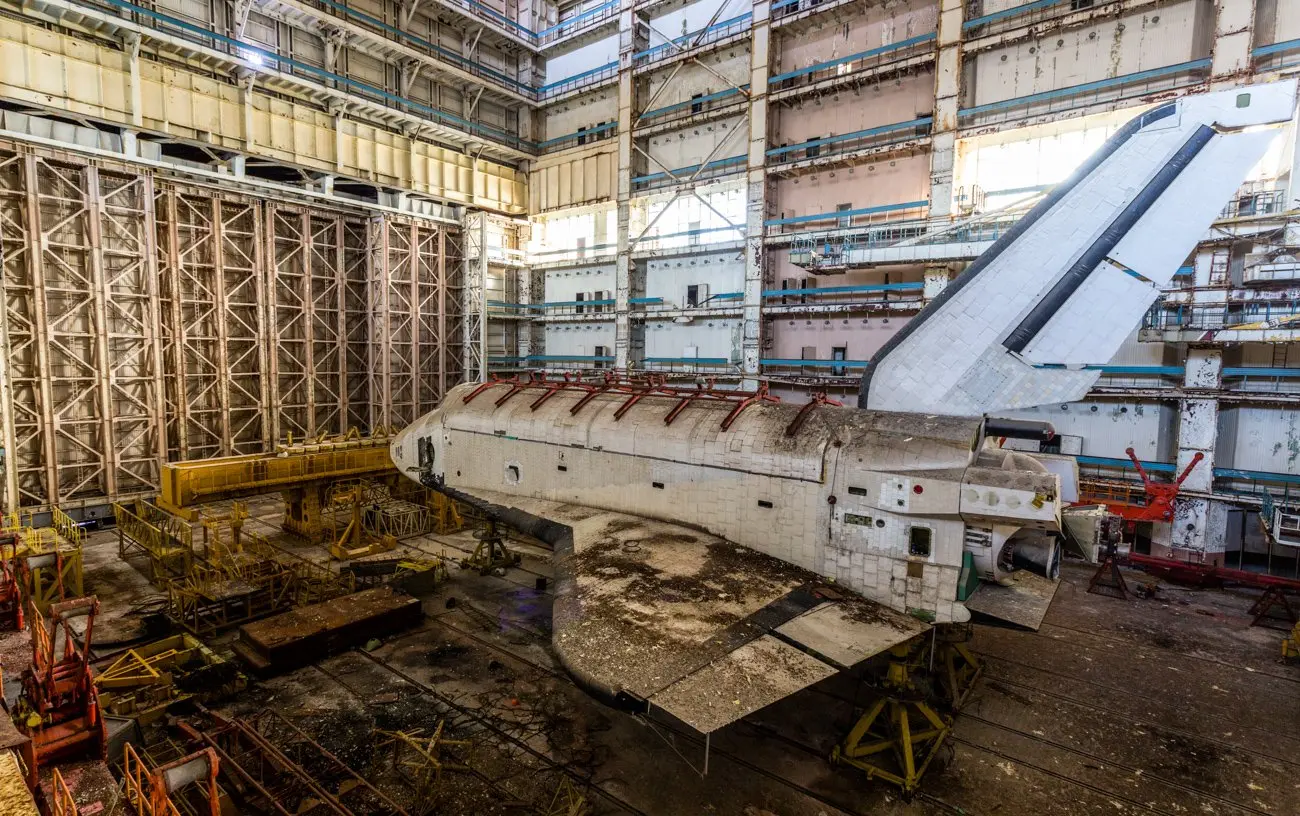
OK-MT — beside Burya at Baikonur. An engineering mock-up used to rehearse ground operations: fuelling, mating with the rocket, servicing. It stands in the MZK next to Burya, and together they are the "two Burans in the hangar at Baikonur" that tour descriptions refer to. Strictly speaking the phrase is inaccurate: only one of them is a flight vehicle, and that one never flew.
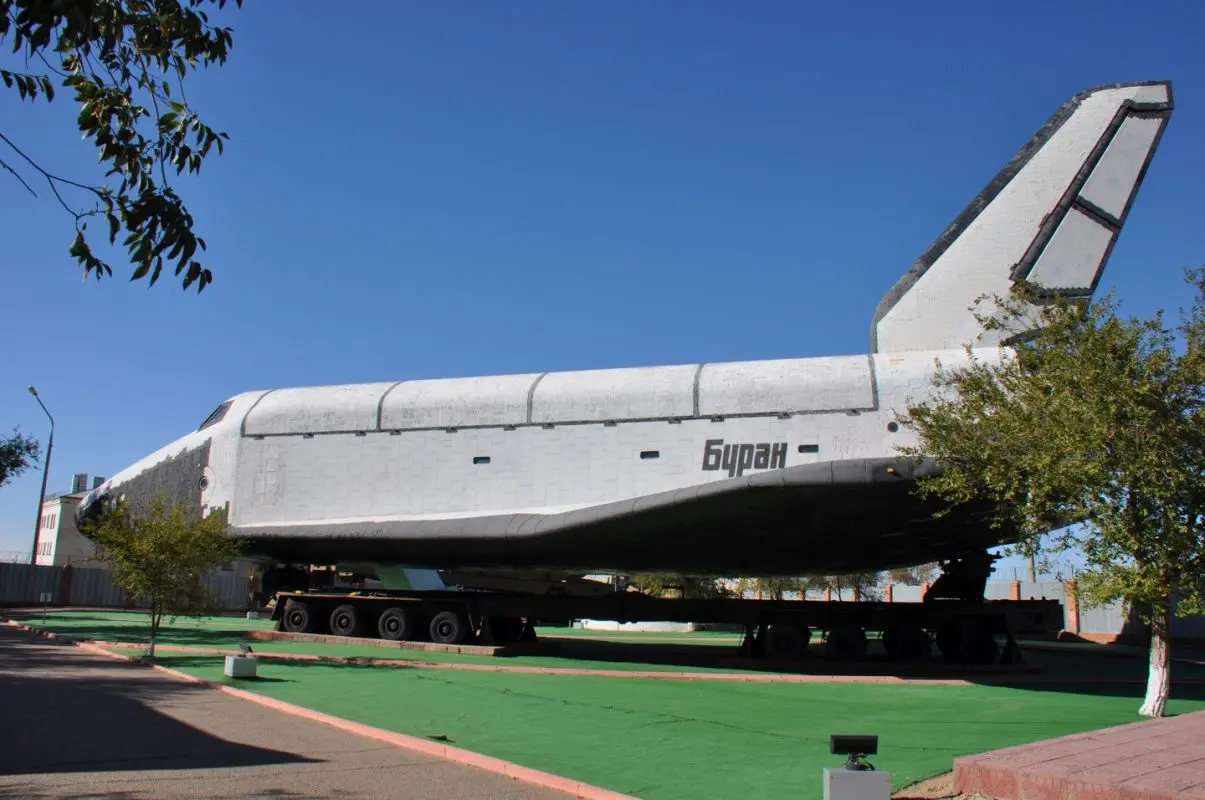
OK-ML-1 — outside the cosmodrome museum at Baikonur. The first full-size mock-up, built in 1982 for structural and vibration testing. It was flown to Baikonur on the back of a VM-T Atlant carrier aircraft to test the interface with Energia, then left to rust in the open for years. In spring 2007 it was cleaned up and put on display at the cosmodrome museum at Site 2, a short distance from Gagarin's Start — the one Buran at Baikonur you can see without going into a hangar.
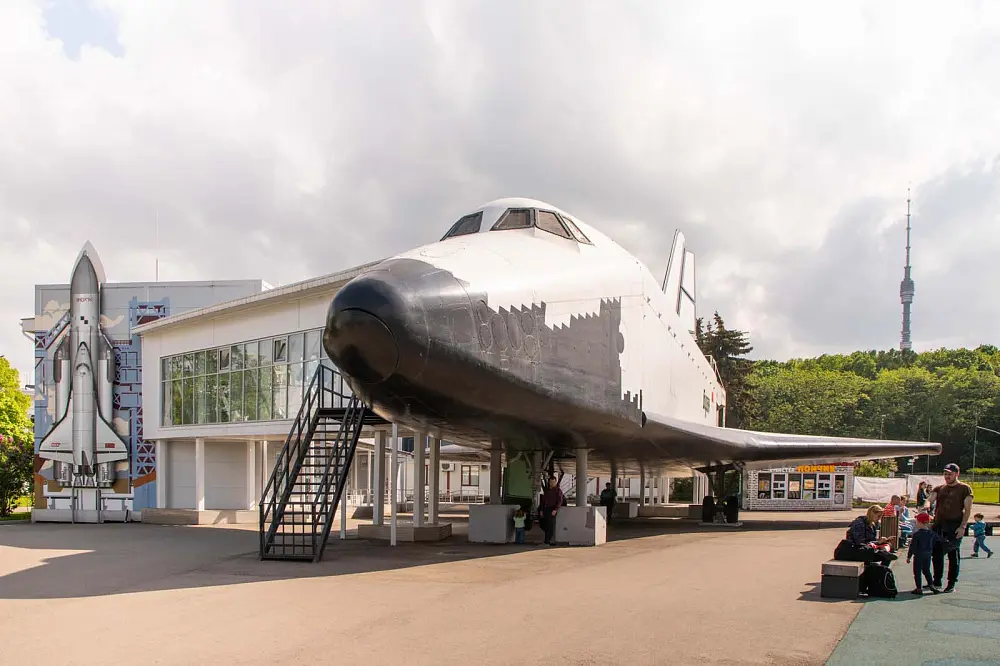
The Buran at VDNKh, Moscow. The easiest of all to visit. Its sign reads "Buran BTS-001"; programme histories usually identify the airframe as OK-TVA, a structural test article. From 1995 it stood in Gorky Park as an attraction. On the night of 5–6 July 2014 it was taken apart and trucked 15 km across central Moscow to VDNKh — all 50 tonnes of it. Since 29 August 2015 it has been a museum on Industry Square, next to the Vostok rocket and the Cosmos pavilion, and you can go inside: there is a reconstructed flight deck and a landing simulator.
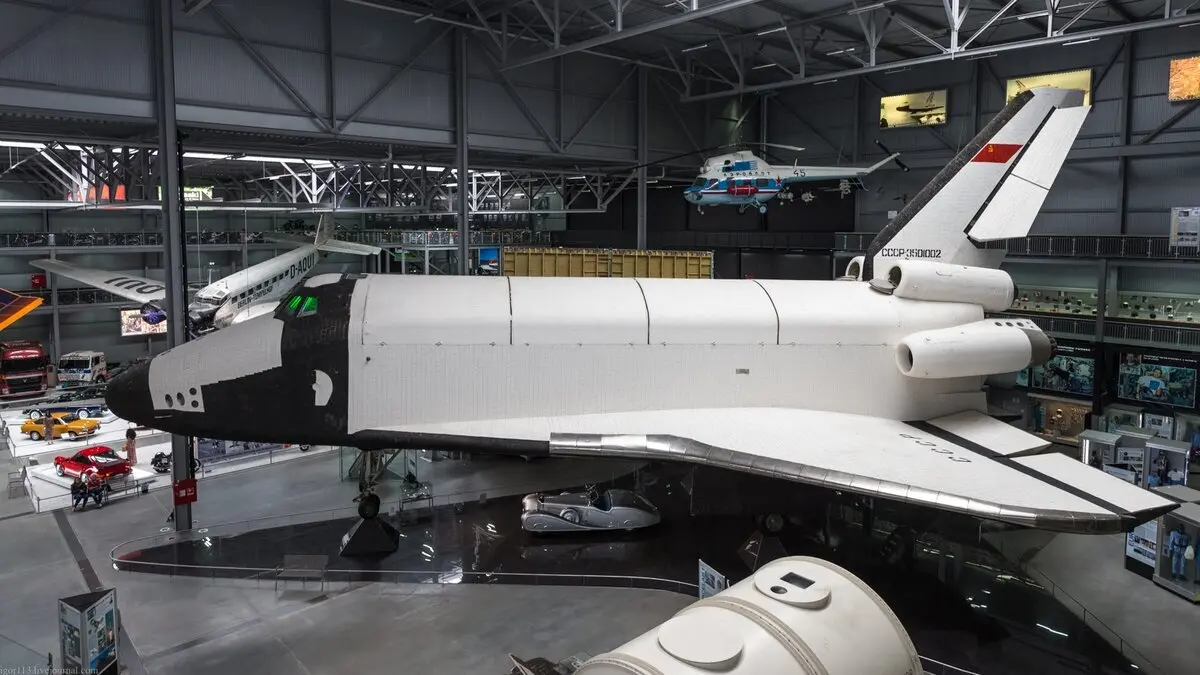
OK-GLI — in Germany. The atmospheric test vehicle, fitted with its own jet engines, which made 25 flights rehearsing the approach and landing. Since 2008 it has been at the Technik Museum Speyer. No permits, no closed zone, open to anyone with a ticket — for a European reader, the one Buran you could go and see this weekend. It is also the only Buran that actually flew and still exists, even if it never left the atmosphere.
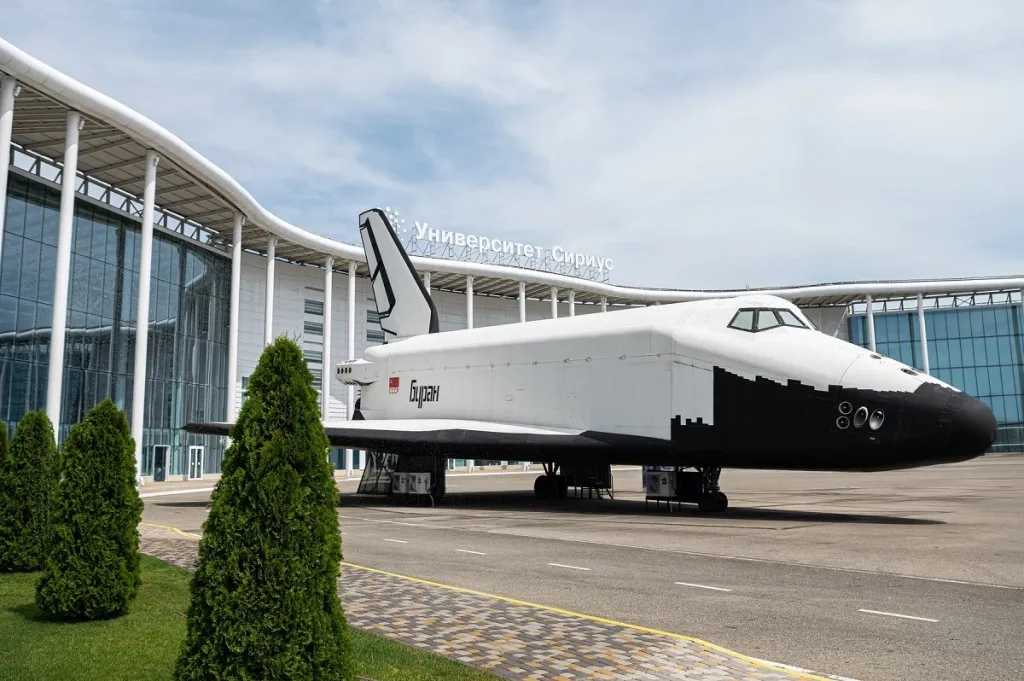
One more, the electrical test article OK-KS, has been at the Sirius education centre in Sochi since 2017. The rest remain at industrial test sites.
Коротко: кто где
- 1.01 «Buran» — flew 15 November 1988 — destroyed 12 May 2002 in the Site 112 roof collapse
- 1.02 «Burya» — 95–97% complete, never flew — MZK, Baikonur: visitable on a tour
- 2.01 «Baikal» — 30–50% complete — Museum Complex, Verkhnyaya Pyshma: under restoration
- 2.02 and 2.03 — early construction only — broken up or left at the plant
- OK-MT — engineering mock-up — MZK, Baikonur, beside Burya
- OK-ML-1 — structural mock-up — cosmodrome museum, Site 2, Baikonur
- «Buran BTS-001» (OK-TVA) — structural mock-up — VDNKh, Moscow: open to the public
- OK-GLI — flew in the atmosphere — Technik Museum Speyer, Germany: open to the public
- OK-KS — electrical mock-up — Sirius, Sochi
Why the Baikonur orbiters are so hard to see
The internet's image of the hangar was largely built by people who should not have been there: urban explorers, crews from CNN and National Geographic, and a long tail of photographs showing graffiti on the fuselage. Out of that grew a general assumption that it can only be reached illegally.
That is no longer the case — but nor can you simply turn up. The MZK sits inside the closed zone of the cosmodrome, which requires two permits: one for the town of Baikonur and one for the cosmodrome itself, both filed through an accredited organisation. Legal access exists, and it is part of the standard excursion programme.
One further development matters here. In 2025 the assembly-and-fuelling building was transferred to Kazakhstan along with Gagarin's Start and the dynamic test stand, removing all three from the Russian lease. Kazakhstan has stated its intention to develop these facilities for tourism. For the first time in thirty years, the hangar's likely future is a museum rather than a store room.
How to see them
Baikonur is in Kazakhstan, not Russia — reached via Almaty or Astana, then Kyzylorda, roughly 240–255 km away. Kazakhstan itself is visa-free for around 56 countries for up to 30 days; the cosmodrome permits are a separate process entirely, and the full sequence is in the complete guide.
One trip covers three airframes: Burya and OK-MT in the MZK, and OK-ML-1 outside the cosmodrome museum. All of it is part of the inter-launch programme — three days, €900, year-round. Outside a launch campaign the orbiters are seen without the compression of launch week, which is probably the strongest single argument for travelling here *without* a rocket on the schedule.
What the permits require and when to file: the permit article. The history of the pad transferred in the same package: Gagarin's Start.