Gagarin's Start: the history of Site No. 1 at Baikonur

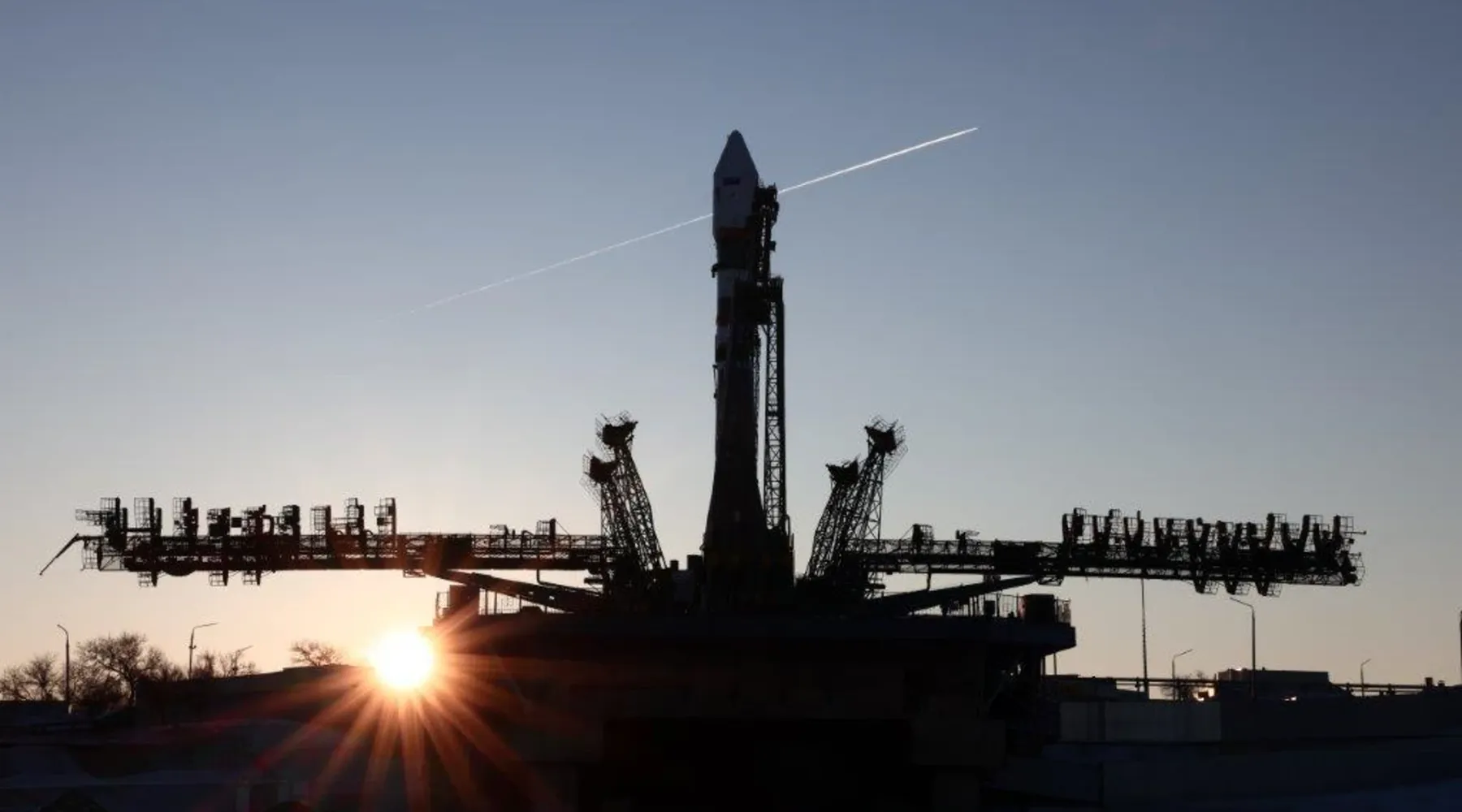
There is a patch of concrete in the Kazakh steppe from which both the Space Age and human spaceflight began. Not two neighbouring pads — the same one.
Formally it is Site No. 1, Launch Complex No. 5. Everywhere else it is Gagarin's Start, and that is the name that stuck.
Three numbers before the history: 520 launches across sixty-two years, from May 1957 to September 2019. The first artificial satellite. The first human in space. And silence since the autumn of 2019.
1957: a pad built for one rocket
Комплекс ввели в строй 5 мая 1957 года. Строился он под конкретную машину — межконтинентальную Р-7 Королёва, ту самую «семёрку», от которой происходят все советские и российские «Союзы» до сегодняшнего дня.
The complex entered service on 5 May 1957. It was built around a specific machine — Sergei Korolev's R-7 intercontinental missile, the "semyorka", the ancestor of every Soviet and Russian Soyuz rocket flying to this day. That lineage matters for a visitor: the rockets that leave Baikonur in the 2020s are direct descendants of the one this pad was poured for.
The first R-7 lifted off on 15 May 1957, and failed. So did the ones after it. The rocket turned out to be harder than expected, and the summer of 1957 was a summer of failures.
Success came on 21 August 1957, when an R-7 flew its full profile. From that moment the Soviet Union possessed a rocket capable of putting a payload into orbit, and the only open question was what it would carry first.
4 October 1957: Sputnik
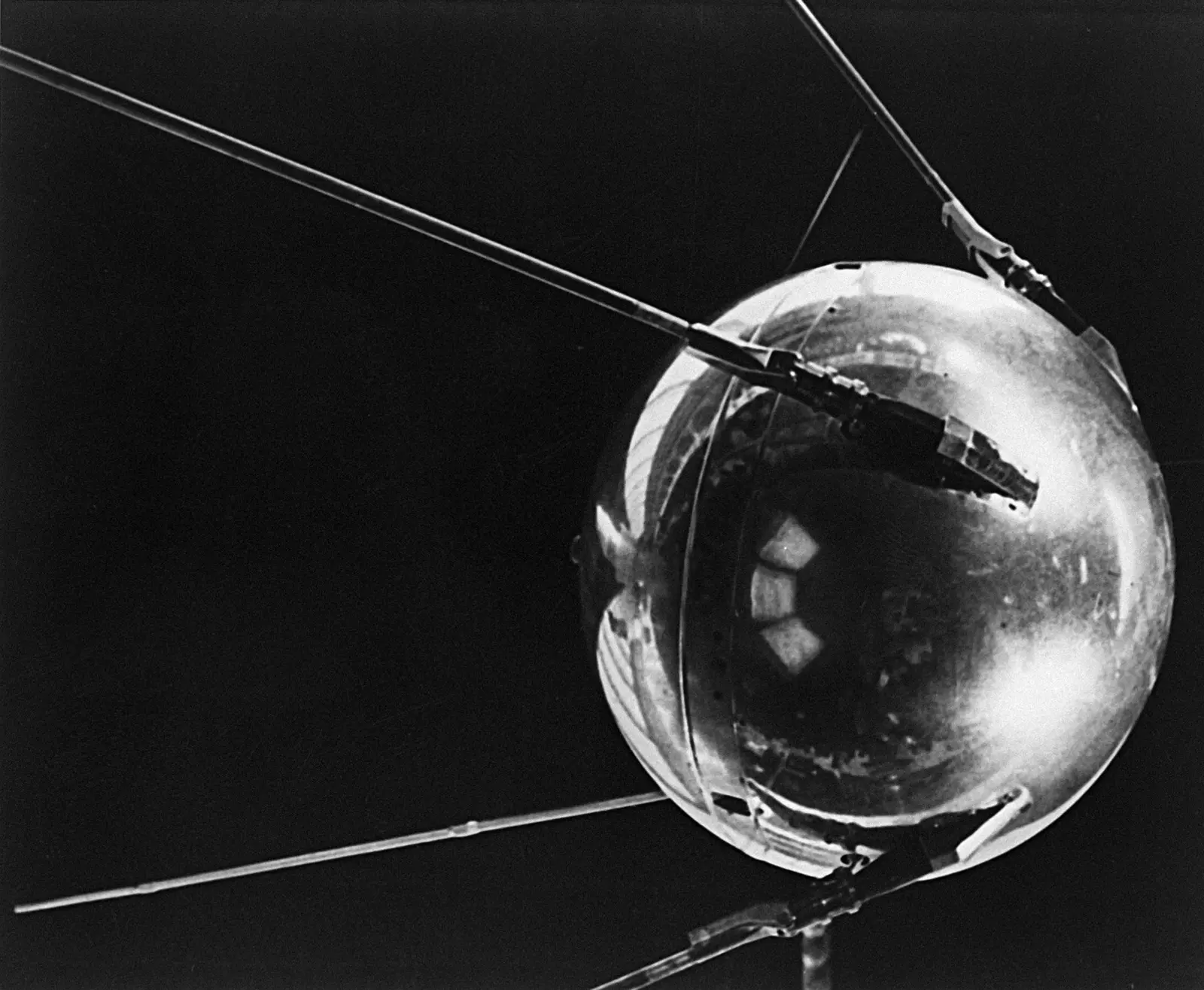
The answer is famous. On 4 October 1957 the first artificial satellite of the Earth left Site No. 1.
It weighed less than a hundred kilograms and could do one thing: transmit a signal. That was sufficient. Radio amateurs around the world heard it, and from that night the space age stopped being theoretical.
The detail worth holding on to, standing there: Sputnik and Gagarin departed from the same pad. Not an adjacent one, not a rebuilt one — the same launch complex.
12 April 1961: Gagarin
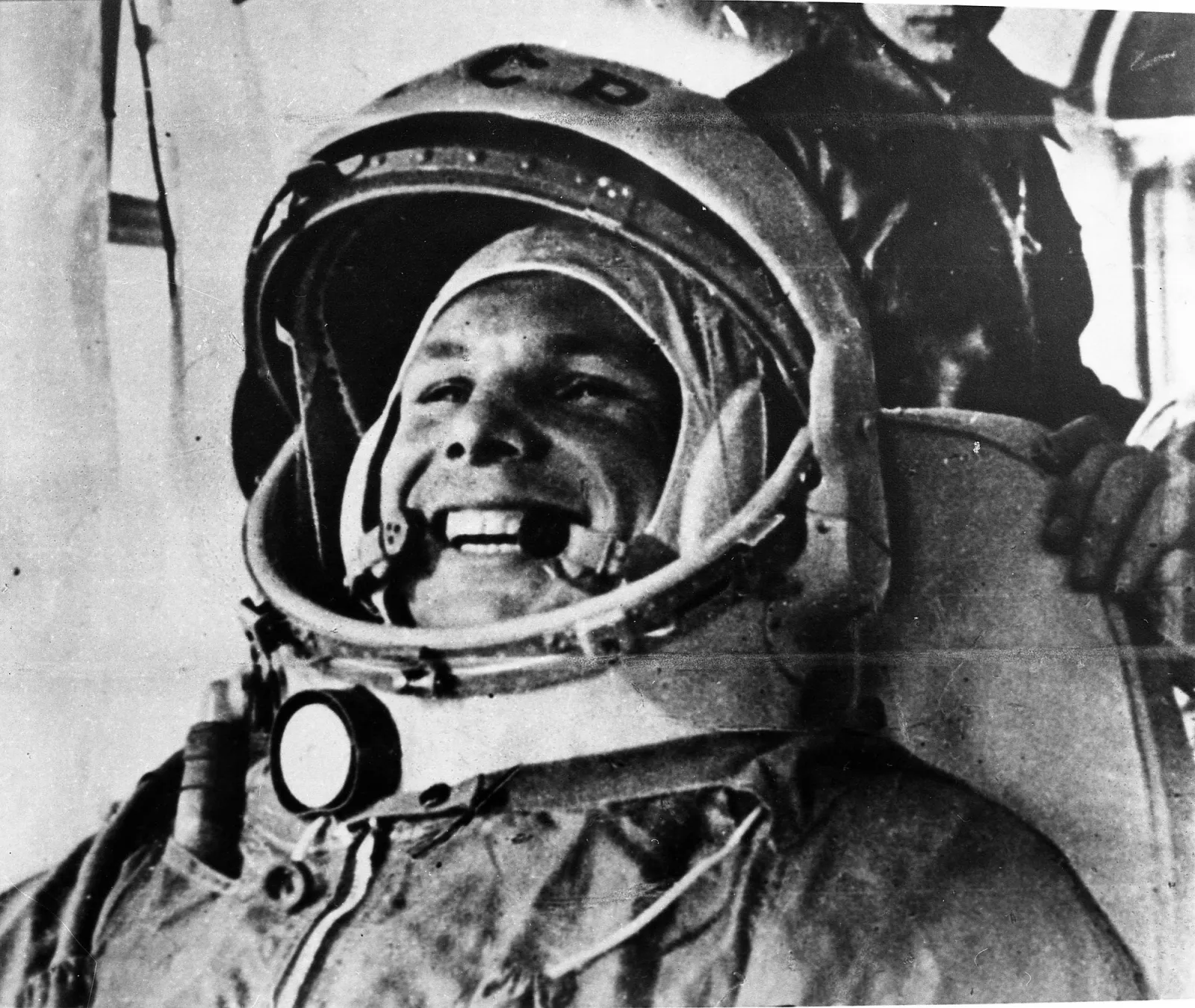
On 12 April 1961, Vostok lifted off from Site No. 1 with Yuri Gagarin aboard.
The flight lasted 108 minutes — a single orbit. The date became Cosmonautics Day, and the pad acquired the name it still carries.
From then until 2019 it served as the primary crewed launch complex. Vostok, Voskhod and Soyuz all departed from here, including almost every expedition to the Salyut stations, to Mir, and to the International Space Station.
25 September 2019: the last launch
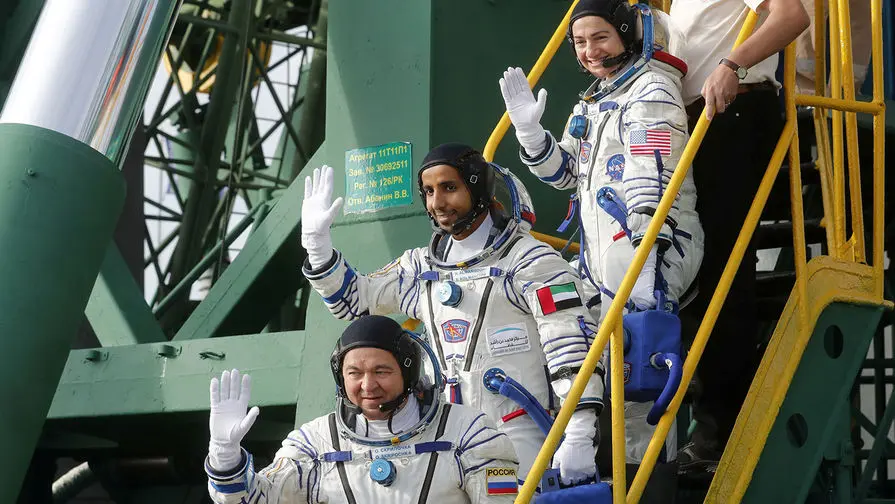
On 25 September 2019 a Soyuz-FG carrying Soyuz MS-15 lifted off from Gagarin's Start. It was launch number 520, and it was the last.
The reason was neither wear nor politics. It was engineering. The pad had been built for the R-7 and upgraded for its descendants, but the newer Soyuz-2 with its digital control system required different ground infrastructure. Reworking a sixty-year-old complex to accept it was judged not worth doing, and crewed launches moved to Site 31, which is where they fly from today — and where the viewing line sits on a modern launch trip.
So Gagarin's Start did not end in an accident or a closure decision. It stopped because the rocket it had been designed around stopped flying.
2025: handed back to Kazakhstan
By 1 June 2025 Gagarin's Start had been transferred to Kazakhstan and removed from the Russian lease. Transferred alongside it were the assembly-and-fuelling building and the dynamic test stand.
Kazakhstan's stated intention is to develop the site as an open-air museum and visitor complex. At the June 2026 government meeting in Astana, the transferred facilities were explicitly described as having significant tourism potential, and Baikonur as a whole was designated a priority tourism project.
There is a logic to it. An operational launch complex cannot be a museum — people are working. A stopped one can be, and Gagarin's Start is better suited to that role than any structure on the planet.
One consequence worth stating plainly, because the confusion is common: nothing launches from this pad any more. It is a monument, not a working complex. Anyone hoping to watch a rocket leave Gagarin's Start is about sixty years too late and six years past the last chance.
What is there now
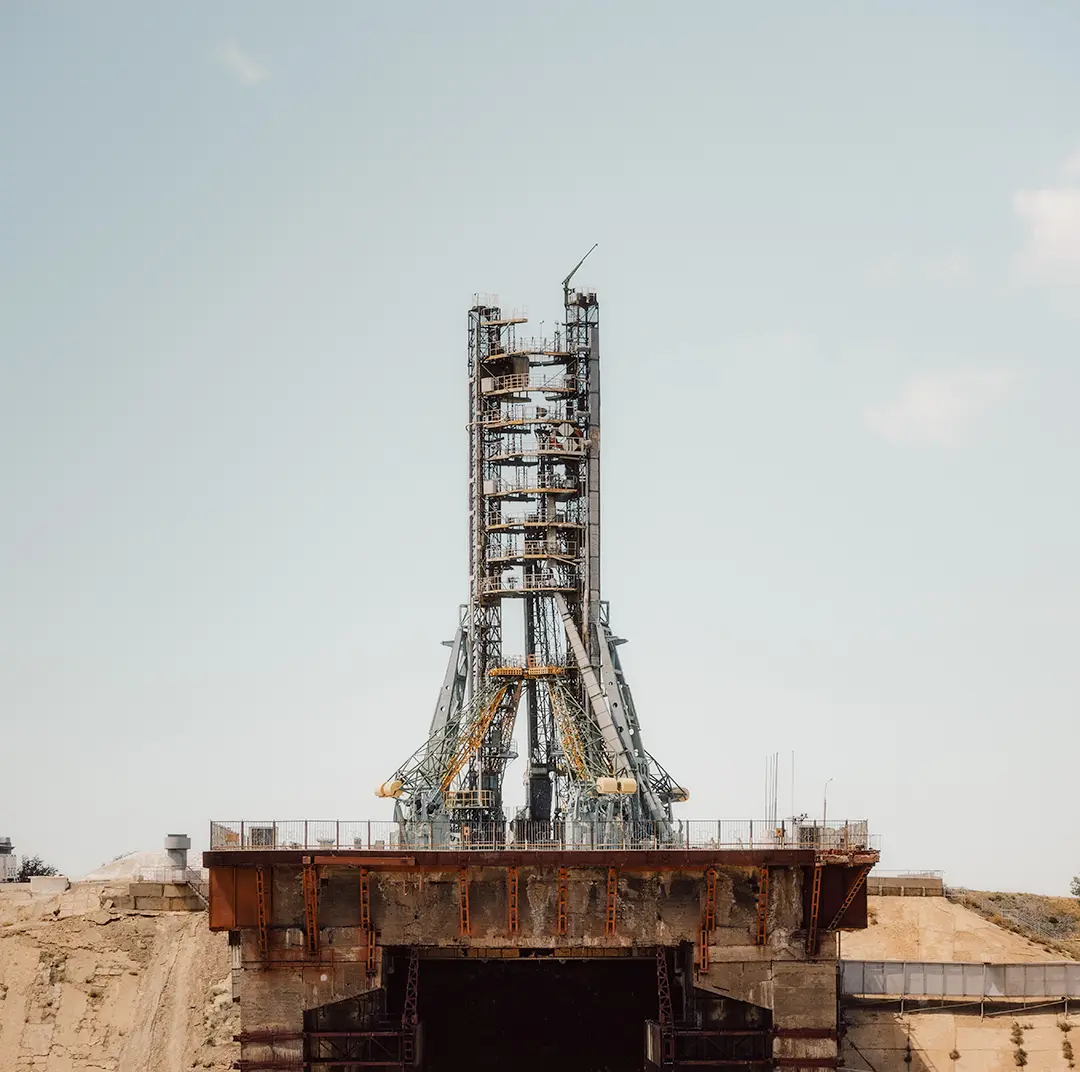
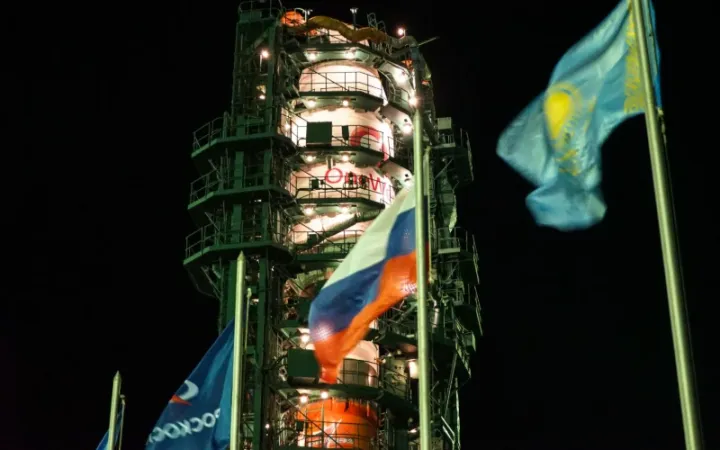
The launch complex is standing. The cable-and-fuelling tower, the concrete, the structures — all of it is in place. Only the rockets are gone.
Visitors are admitted. It appears on both the launch programmes and the inter-launch ones, and it is noticeably calmer on the latter, because outside a launch campaign the site is not sitting next to an active countdown.
The reaction almost everyone describes is the same: the place is smaller than expected. Gagarin's Start does not impress by scale — against a modern complex it is compact, almost modest. What lands instead is the specificity. This particular slab of concrete, the one under your feet, is the one the first human being left from on 12 April 1961. Not a reconstruction, not a plaque marking the
spot. The place itself.
The dates, in short
- 5 May 1957 — complex enters service
- 15 May 1957 — first R-7 launch; failure
- 21 August 1957 — first successful R-7 flight
- 4 October 1957 — the first artificial satellite of the Earth
- 12 April 1961 — Yuri Gagarin, Vostok — 108 minutes, one orbit
- 25 September 2019 — final launch, Soyuz MS-15; 520 in total
- 1 June 2025 — transferred to Kazakhstan
How to get there
The pad sits inside the closed zone of the cosmodrome, which means permits — and not one. A separate permit is required for the town of Baikonur and for the cosmodrome itself, and both are filed through an accredited organisation rather than by individuals. Details and deadlines are in the permit article.
Note also that Baikonur is in Kazakhstan, not Russia, and is reached via Almaty or Astana and then Kyzylorda. For most Western passports Kazakhstan is visa-free for 30 days; the cosmodrome permit is an entirely separate matter. The whole trip is laid out in the full guide.
Gagarin's Start appears on both programmes, but it is at its best in the
inter-launch period — three days, €900, year-round, with no launch date to defend and no crowd from a launch campaign standing in front of it.